This analysis was first published in SvD Näringsliv, in Swedish, on May 14th, 2025. This piece was translated from Swedish by Claude. Some phrasing may differ from a human translation.
With a Stenbeck at the helm, Kinnevik’s shareholders have reason to hope for significant change. But her to-do list for turning the company around is worryingly long.
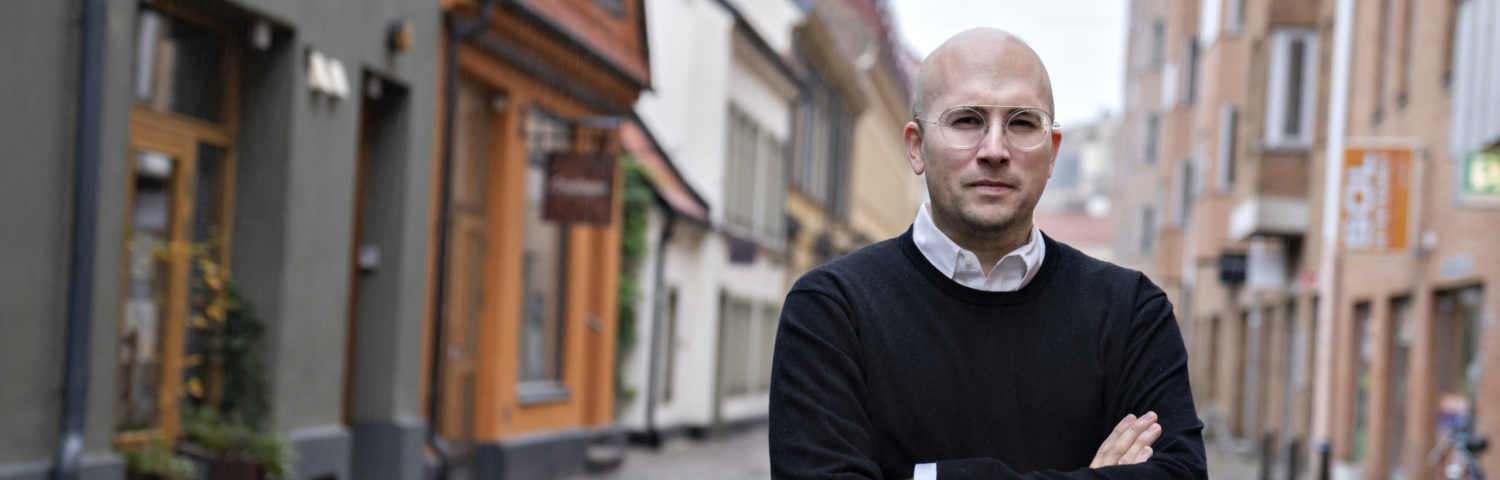
Ambitions, an anonymous portfolio, and a large pot of money. That is the starting point for a scaled-back Kinnevik. At Monday’s annual general meeting, Cristina Stenbeck took over as chair of the family company’s board.
It has been a long time since the company was any kind of power player in Swedish business life. The large historical holdings — Korsnäs, Millicom, Tele2 — have all been spun off. What remains is a sprawling collection of foreign tech companies of varying kinds: health technology mixed with hotel booking platforms and travel expenses software. Why precisely this combination? No one seems able to give a convincing answer.
The common denominator is said to be Kinnevik’s significant engagement and ownership stake — described at the AGM by CEO Georgi Ganev as “almost 15 percent” in the core holdings. That, however, is something of an overstatement. Only one of the five companies actually reaches that level — two of them are even below 10 percent.
Kinnevik has become a small large shareholder. That is unlikely to be a position Cristina Stenbeck is particularly interested in maintaining. The to-do list is therefore long, and will likely keep both the board and management busy for some time to come.
The most important item on that list is to work out what kind of company Kinnevik is supposed to be. Just over a year ago, the then-board proposed distributing 6.4 billion kronor in a special dividend. That was money that came in from the Tele2 sale.
The dividend was no doubt appreciated by shareholders, but the negative signal it sent was significant. How can an investment company fail to find enough suitable, large, or attractive objects to invest in?
The total portfolio consists of 33 relatively anonymous companies.
Giving up and distributing the money suggests a shortage of ideas — or at least that the ambitions are too limited. This is Stenbeck’s first and most important assignment. What is a modern Kinnevik in 2025 and beyond? That is a question current management has struggled to answer for some considerable time.
The next item concerns market confidence. When I speak with people in the venture capital industry, they describe Kinnevik as a rigid and slow partner to work with — a company that acts like a large corporation without actually doing particularly large things. In the most recent quarter they invested 800 million kronor, primarily in three companies already in the portfolio. If you are too slow and formal, it is difficult to work with fast-moving tech companies. More agile venture capital is not in short supply in Sweden or northern Europe today. That competition has intensified considerably.
The third item concerns the existing portfolio. Which holdings have been in focus has shifted during Ganev’s time as CEO. The company Babylon Health, long celebrated as a pioneer in digital healthcare, went bankrupt in 2023. The food delivery company Mathem merged with its Norwegian equivalent Oda but has continued to struggle. In the most recent quarterly report, the company is not mentioned at all.
In total there are 33 relatively anonymous companies in the portfolio. Throughout all of 2024 and so far in 2025, not a single investment in a new company has been made. In 2023 it was only three new companies. The direction in which Ganev wants to steer the holdings is therefore difficult to discern.
Restructuring a company like Kinnevik is not something that happens overnight — especially not during the turbulent years that have passed. But the board’s patience has been more than generous. Beyond a cleanup exercise in which parts of the portfolio have been sold off, and individual top-up investments in existing holdings, it is difficult to identify how far Kinnevik has come in this transformation — or even whether the goal is still relevant, or in anyone’s sights.
Not much has gone right for Kinnevik in recent years. It is the CEO who is responsible for the business — but the board’s most important task is to ensure the company has the right CEO. Now it is Cristina Stenbeck who sits at the helm as the new chair. Reasonably, her accountability begins now.
