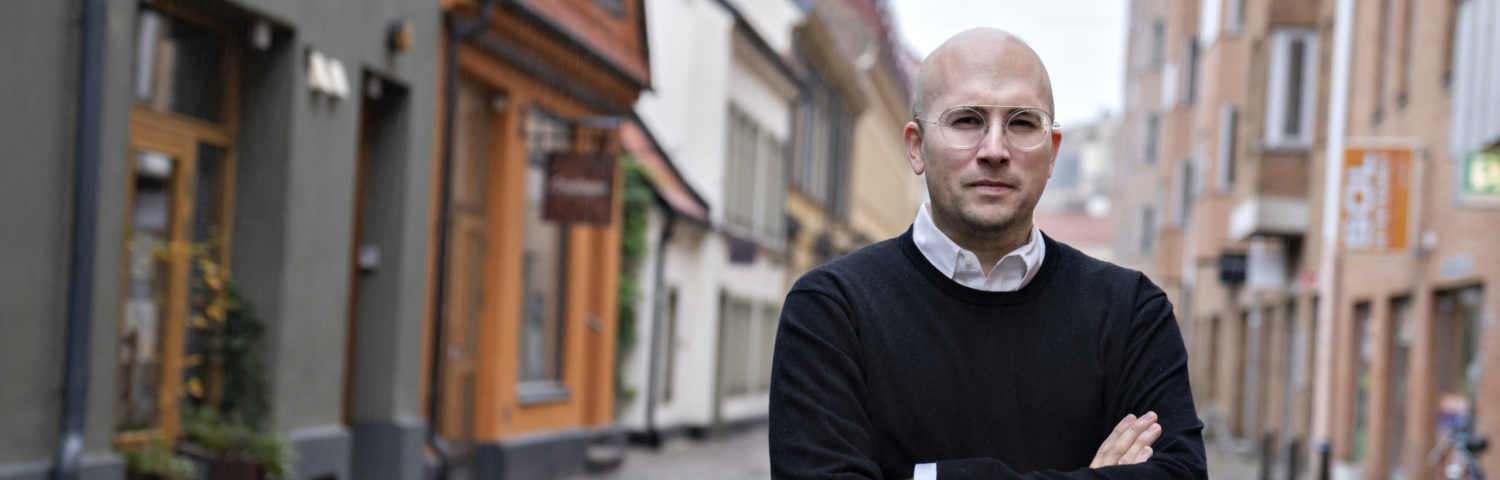
Testing Donald Trump’s Social Network

SvD Näringsliv

This analysis was first published in SvD Näringsliv, in Swedish, on May 31st, 2022. This piece was translated from Swedish by Claude. Some phrasing may differ from a human translation.

Kicked off Twitter, Donald Trump filled his own void. But the social network Truth Social is a clumsy copy — and here’s why Trump will almost certainly come back to Twitter.

What is Truth Social? It’s a social network that looks — and in all essentials works — exactly like Twitter. But instead of “tweets” you write “truths”. A “retweet” is therefore a “retruth”. At least it’s consistent.

Trump says he started the service to “stand up to big tech’s tyranny”. In that you can probably read his displeasure at being kicked off Twitter in connection with the storming of the Capitol in 2021. After extensive technical problems, the service is now up and running for real, though only for users in the US (it didn’t, however, take much skill for a Swede to get an account).

Even if the service looks like Twitter, there are a few clear differences. I chose to follow the first 50 accounts that were recommended to me when I logged in, and there was an obvious theme among them. Fox News, Bongino Report, Breitbart and of course Donald Trump himself were among the suggestions. I drew followers of my own like “Redneck Humor”, “Julian Assange Fans” and “Conservativeforchrist”. That last one appears to be some sort of advertisement for a cryptocurrency called “Prayercoin”.

To paraphrase Trump’s former spokeswoman Kellyanne Conway, you could say the site consists of “alternative truths”. It is almost exclusively profiles from the American political right here, and accounts like “The New York Times” are obviously fake — they’ve only posted three times, two of them promoting Florida’s Republican governor, Ron DeSantis. Extra piquant, given that Trump wrote this week that Elon Musk shouldn’t want to buy Twitter precisely because of the volume of bots and fake accounts. Trump’s own service doesn’t seem much better.

Trump has previously been very critical of the American law known as Section 230, because it means social networks don’t have to be held legally responsible for what’s posted on them. Now he benefits from that very same law. The first result after searching for the word “covid” suggests the account “covidtruth”, which in turn posts vaccine-critical information sourced from Russian RT, Russia Today. But this is permitted under American law, and apparently under Truth Social’s own rules too.

For a platform that claims to stand for free speech, however, there are some things that aren’t tolerated. The web developer Matt Ortega tried to register an account referencing a joke about Truth Social’s CEO, Devin Nunes. It didn’t last long — the account was immediately deleted. Free speech has its limits at Trump’s place too.

Yes, most likely he’ll return the moment he’s let back in. The point of social media for politicians is to a large extent reach — being seen by as many people as possible. On Twitter, Trump had over 79 million followers; at the time of writing he has just over 3 million on Truth Social. Those numbers suggest he’s coming back.

Trump will, however, have a hard time abandoning Truth Social, given his financial interests in the service. In a filing with the US Securities and Exchange Commission, he has also promised to post his posts on Truth Social at least six hours before he posts them anywhere else. The exception is “political messaging” — which, generously interpreted, could cover most of what he posts during a coming election campaign.

There’s no word on whether the service will open up in other countries, but don’t count on it anytime soon. Running a social media platform is complex — both technically and legally. Diving into that and having to handle the EU’s legislation on top of everything else is probably very unlikely in the short term.

So how do you sum up Truth Social? It’s a clumsy copy of Twitter, full of Republicans. It doesn’t appear to be particularly satisfying even to them, since they’re still on Twitter too. There’s no innovation to speak of in the service, and no draw beyond Trump posting now and then.

Back in October last year, I wrote — to the dismay of Swedish Trump supporters — that Truth Social would be a flop. After actually using the service, there’s nothing to suggest otherwise.

Cathie Wood Is Losing Billions — But She Won’t Quit

SvD Näringsliv

This analysis was first published in SvD Näringsliv, in Swedish, on May 27th, 2022. This piece was translated from Swedish by Claude. Some phrasing may differ from a human translation.

Fund manager Cathie Wood became the face of the tech boom when she pulled in billions to her controversial investment strategy. But when the crash came, she went from superstar to a figure in doubt. Can she turn Ark Invest back to winning?

It’s December 2021. Several of the new tech companies on the stock market have started falling, but it’s partly hidden by tech giants like Apple and Microsoft, whose shares continue to climb.

In hindsight, it’s the calm before the storm. Catherine D. Wood, CEO of the fund manager Ark Invest, is being interviewed on CNBC.

“When traditional fund managers manage their portfolios in a low-risk environment, they diversify. They buy index stocks, and they sell ‘our’ stocks. And then we’re there to pick them up. It usually works very well,” she says.

Cathie Wood, as she’s known, had been celebrated as stock picker of the year by Bloomberg the year before. Three of her exchange-traded funds ranked at the top for returns, a full 60 percent better than the next competitor on the list.

It has been an enormous boom — for the tech sector in general, and for Cathie Wood in particular. But now something strange has happened. The market is suddenly behaving differently, and Wood seems puzzled herself.

“This risk-off period is very unusual for us. I’ve never been in a market before where the market has gone up, while our strategies have gone down,” Wood says.

The CNBC journalist breaks in with the obvious follow-up question: will you then change your strategy?

“We have a five-year investment horizon. Our strategy is our strategy. And we believe that truth will win out.”

Since that interview, the three funds she won with at Bloomberg have fallen by more than 50 percent — in 2022 alone. Looked at on a five-year view, retail investors would have made more money buying a plain index fund tracking the S&P 500 than holding Ark Invest’s funds.

Wood promises a 40 percent upside — per year. And she reached 38 percent, before the crash came.

Is this the end for Cathie Wood? The face of the boom in growth stocks over the past few years, and the one who has taken the hardest hit now that the wind has turned?

Because one thing is clear: from the start she has gone her own way.

Cathie Wood was born in 1955 in Los Angeles. Her parents were Irish immigrants to the US, and her father was a radar engineer for the Air Force. The interest in technology and economics seems to have come from there.

At USC in her hometown she met Arthur Laffer, a professor of economics and the man behind the Laffer curve. In 1974 he had drawn a simple curve on a napkin for Republicans Dick Cheney and Donald Rumsfeld — later vice president and secretary of defense under George W. Bush — to illustrate how high taxes lead to lower tax revenue. A theory that became very influential, but also contested.

Wood talked her way into his class, even though she didn’t officially qualify yet. But she didn’t impress. In the Financial Times, Laffer described her as sub-par — but unlike many other students, she didn’t give up.

“She said, ‘what do I need to do to get better?’ And then she got better. Cathie works harder than anyone I know. She always has.”

Over time Laffer became a mentor to Wood, someone who has followed her throughout her professional career. When she started Ark Invest many years later, he received a small stake in the fund as thanks.

Wood — also a Republican, and a Trump supporter — began working in finance and climbed all the way to chief investment officer at the American investment firm Alliance Bernstein. It was there that her own view of the market began to stand out, and it became a dividing line within the firm.

Wood’s boss at the time, Lisa Shalett, called her investing style “a rollercoaster”, something that appealed more to retail investors than to the big institutions. Several people have described Wood as an evangelist for the tech sector, someone whose enthusiasm easily rubs off on those around her.

“She does her research, she believes what she believes. Sometimes when the market goes against her, she leans in even harder,” Shalett told the Financial Times.

Evangelist is a fitting description in more ways than one. Wood is deeply religious, and has carried her Christian faith with her through her whole life. It also guided her to the next big step in her career.

After a bad quarter at work, she had a feeling — or as she describes it, a voice speaking to her:

“I really felt like it was the Holy Spirit saying to me, ‘Okay, this is the plan.'”

At 57, she started Ark Investment Management LLC, often shortened to Ark Invest. She put all her own money from a long career on the line. The year was 2014, the same year the Chinese e-commerce giant Alibaba went public. Alibaba would come to be a typical example of the kind of stock Wood believed in.

“Most of my friends said I was crazy, but I didn’t listen to them. I knew I had to follow God’s will for me,” Wood said in 2016.

The name of the fund also comes from her faith. It doesn’t refer to Noah’s Ark, however, but to the Ark of the Covenant from the Old Testament. The Ark is said to be where the stone tablets with the Ten Commandments were kept.

With Ark Invest, Wood could carry on her evangelism for tech and innovation companies more freely. She applied the innovation mindset to her own industry too, and became a pioneer with a suite of actively managed exchange-traded funds — ETFs — at a time when passive index funds were the standard.

She talked about her investment strategy in terms of “disruptive innovation”, focusing on high-tech companies that could upend existing markets. That list includes Crispr Therapeutics, which works in gene editing, the video service Zoom, the crypto exchange Coinbase and the drone company Aerovironment.

But no company has fit the mould better — or mattered more to Ark Invest — than Tesla.

Tesla became the archetype of the companies Wood wanted to invest in. A public company, with a clearly future-oriented strategy, something that could revolutionise its environment if it succeeded. And in Tesla’s case it turned out to be hugely successful.

When Tesla’s valuation started to take off in early 2020, Wood’s primary fund, Ark Innovation ETF (ARKK), followed. For roughly two years they climbed together, and Wood became known as one of the few who had spotted Tesla’s true value early. At least that’s how Tesla fans saw it. A seer of the future — with the Tesla investment as proof.

But then the trend turned sharply. And Cathie Wood was being interviewed on CNBC.

Suddenly her strategy wasn’t working the way it had before. Tesla still had a month or two before it started falling too, but Ark Invest felt the hit right then. What added to the risk is that Wood likes to hold the same stocks across several of her funds. Great in a broad rally, painful in the opposite scenario.

Wood didn’t back off an inch, however, and for those who know her the behaviour was familiar.

“Cathie is a ‘boom or bust’ investor because she neither disinvests nor manages risk. That’s the challenge she’s had her entire career,” Lisa Shalett told the Financial Times.

The best-known fund, ARKK, is down roughly 60 percent year to date and has now wiped out all its gains since the start of 2019. Many investors have sweated and wondered if they were on the wrong track.

But rather than rethink, Wood has gone even deeper into the same trade. Since the end of February she has bought more than 1.3 million new shares each in the trading app Robinhood and in Coinbase. All while their share prices fell 50 and 70 percent respectively. A few days ago she wrote on Twitter that artificial intelligence, over a six- to twelve-year horizon, could accelerate GDP growth from 3-5 percent to 30-50 percent — per year. An optimistic view, to put it mildly.

For Wood, it’s self-evident. As she puts it herself: “the future of investing is to invest in the future”.

But aiming at the future is a moving target. When an investor could have made more money in a cheap index fund, patience with Wood’s controversial strategies is tested. Can she come out of the crisis as a winner again? Or will she be written into history as a temporary phenomenon of the tech boom?

With Cathie Wood, it’s all or nothing. That’s how she has always wanted it.

Klarna’s Results — a Warning to Every Swedish Tech CEO

SvD Näringsliv

This analysis was first published in SvD Näringsliv, in Swedish, on May 24th, 2022. This piece was translated from Swedish by Claude. Some phrasing may differ from a human translation.

Klarna’s quarterly report and announcement of layoffs isn’t just a rude awakening for one of Sweden’s new flagship companies. The message — despite all the flowery language — will send a chill through every leader and owner of a Swedish tech company.

A good way to understand how a company is doing is to study the euphemisms that turn up in its quarterly report. The document, originally meant to bring clarity about how a company is performing, is often a masterpiece of creative and embellishing prose. Look at Klarna’s latest report for the first quarter of this year and you’ll find a few candidates in that category.

The highest inflation in 30 years and a war in Europe is described as “we acknowledge the global macroeconomic shifts and the headwinds affecting consumers’ daily lives”. The quotes are our translations from English. But doesn’t it sound poetic?

Keep reading and you’ll see that Klarna “has once again tightened its lending parameters to reflect this changing market context”. That sounds considerably better than the numbers, which show that credit losses rose to SEK 1.1 billion during the quarter.

Klarna is by no means alone in this, but when storms roll in across the tech industry it’s natural to look at its leaders for an indication of where things are headed. A quarterly report becomes particularly interesting. And it doesn’t look like the storm is ending anytime soon. Klarna’s loss grew to SEK 2.5 billion, compared with SEK 650 million in the same quarter last year.

Losing money as a tech company has almost been standard practice in recent years. As long as growth was strong, the market tolerated large losses. That era can now be considered over. For companies that have taken on a heavy cost base — or have fundamental problems with their business model — it can be very hard to pivot quickly enough. Yesterday, Klarna announced it would cut 10 percent of its workforce. The week before, the online doctor service Kry did the same. There will be more news of this kind.

Late-stage tech companies now face a complicated balancing act.

There were, however, glimpses of light. Amid the tech chill, the delivery company Budbee raised SEK 400 million in new capital from existing owners like Kinnevik and H&M. The major shareholders clearly believe in a continued strong rise in e-commerce.

If we see more deals of this kind, they’re likely to come from similar lead investors with strong balance sheets or to involve preference shares, which would guarantee investors get their money back before everyone else. As one Swedish VC put it: “I live in a world where every issue is done with preference shares unless the opposite is proven”. Venture capital without so much venture, in other words.

Late-stage tech companies now face a complicated balancing act. The metrics investors will evaluate them on have shifted very quickly. There’s talk of many planned investments dragging out, and even more that won’t happen at all. And if you’ve planned your fundraising poorly, it can be very hard to pivot to this new reality in time. If investments do happen, the terms are likely worse than they would have been six months ago. It’s difficult to navigate, to say the least.

The largest private companies look at — and are affected by — the stock market. When it falls, they fall too. And the smaller companies in turn look at those larger than themselves. The market drop has already cut Klarna’s valuation by 30 percent — a loss of roughly $15 billion. When Klarna now wants to cut staff and warns of tougher times ahead, there isn’t a Swedish startup CEO who won’t read this and think twice. And they’ll see through the pretty phrasing in the quarterly report too.

“Klarna is well positioned to support consumers in managing their cash flow,” you can read. That may well be true. A more interesting question is who will support Klarna’s own cash flow. It has fallen from SEK 7.6 billion to minus SEK 7.3 billion — in a year.

The Tech Hangover Is Here — Now the Layoffs Begin

SvD Näringsliv

This analysis was first published in SvD Näringsliv, in Swedish, on May 18th, 2022. This piece was translated from Swedish by Claude. Some phrasing may differ from a human translation.

The tech crash on the stock market is creating domino effects throughout the startup ecosystem. The hangover from the last few years of sky-high valuations is here — and the first wave of layoffs in Sweden has started.

The market sell-off in tech came fast and it was brutal. Zoom, Sinch, Peloton and Truecaller have all lost more than 40 percent of their market cap since the start of the year. Even giants like Apple, Google and Microsoft have shed roughly 20 percent. The hedge fund Tiger Global lost SEK 170 billion on its holdings — in the first quarter alone.

To understand what this means for tech companies, you have to look at how the ecosystem behind them works. When venture capitalists invest in startups, they classify their investments as “rounds”. It used to start with a “seed round” — the first money put into a company. You plant a seed that may grow into a real business. After that came Series A, B, C, and so on. Eventually, depending on how the company developed, you might reach the letter combination IPO — initial public offering.

But it quickly got messier than that. As competition intensified, venture capital wanted to get into the best companies earlier, and a new round appeared — “pre-seed”. On top of that, valuations in every other round kept climbing. An investment that used to count as big enough for a Series A might, in some cases, now arrive at seed.

Inflation hit the startup world early. But it’s only now it’s starting to bite, in combination with rising interest rates.

The big tech drop on public markets has forced a new, tougher environment for raising capital. It’s most visible among so-called cloud and SaaS companies (software-as-a-service), service businesses that sell via subscription. The Bessemer Cloud Index tracks how listed companies in this category are valued, and the curve shows a massive fall. One way to value these companies is to multiply their revenue to get a company value. In May last year, the median company traded at 14.38 times revenue. The equivalent figure this May is 6.46. Prices, in other words, have more than halved in a year.

The halving spreads to private companies too. The result of a tougher public market is increased pressure on later-stage startups — around Series B/C and up. Because they’re closer to either an IPO or a sale, public-market comparables become more relevant.

If you’ve taken in money at very high private valuations — as several large Swedish startups have — you can quickly find yourself in a bind.

They can’t go public, because the market climate isn’t favourable.

They can’t raise more money at a higher valuation than the previous round, because no one wants to invest on 2020–2021 valuations.

They can’t keep spending on unrestrained growth, because the money will run out.

So what do you do?

One option is to do what the digital clinic Kry has done and tighten the belt. On Tuesday, the company announced it would lay off around 100 people, about 10 percent of its workforce. “We need to react to the market dynamics and we need to be more careful with our capital,” CEO Johannes Schildt wrote in a memo. Getting to profitability faster is one way to absorb the shock.

Another option is to raise new money, but at a lower valuation than before. This creates additional dilution for existing shareholders, and so it’s not a popular one. Venture capitalists in Stockholm say many rounds are dragging on right now, and that valuations for later-stage companies have almost halved compared to a year ago.

The consequences of a lower valuation can also hit the employees of these companies. Many startups today have various option programs that let staff share in the company’s success as shareholders themselves. Options count as part of total compensation, alongside salary and other benefits. As long as valuations only went up, this has been very lucrative for many in the startup world. But at lower company valuations, the options may be worthless, and a large chunk of employees’ compensation disappears. The possibility of an option ending up worthless is, of course, part of how they’re designed — but many younger employees are experiencing this for the first time.

Over the past few years, a growing number of companies have reached unicorn status — a valuation above one billion dollars. It has been seen as a proof point and a milestone on the way to becoming a giant. After the tech crash, these unicorns are now wondering whether the valuation was worth what it may end up costing them.

A high valuation can turn into a yoke you have to bear. A weaker investment climate will force many companies to cut hard, to extend the runway before they need more money. But a turnaround takes time and can be expensive. If your timing has been unlucky, the cash cushion may be thin and there may be too little time to make big changes. Then cuts alone aren’t enough. Some unicorns probably won’t survive at all.

Facebook Copies TikTok — and Abandons News

SvD Näringsliv

This analysis was first published in SvD Näringsliv, in Swedish, on May 13th, 2022. This piece was translated from Swedish by Claude. Some phrasing may differ from a human translation.

Meta’s new content strategy draws its inspiration from Chinese competitor TikTok. Instead of friends, news and conversation, Facebook’s parent company is now aiming at video and entertainment.

In a dark, church-like building on the prestigious campus of Georgetown University, a large crowd of curious listeners had gathered to hear what was described as “the second act of social media.” Mark Zuckerberg, Facebook’s CEO, stepped up to the podium with a big smile on his face.

It was autumn 2019 and Zuckerberg was heading into a new American election season. He had made up his mind not to get caught in the same crossfire he had three years earlier. Back then, Donald Trump had become president, and many were asking what role Facebook and its algorithms had played in the process.

“We’ve recently clarified our policies,” said Zuckerberg, as so often before. This time the topic was the ability to see politicians and opinion shapers in their original form, to make sure they were presented accurately.

Big words, given the volume of problems the company has had with moderation and the spread of disinformation. What he did not know at the time was that the world was about to enter a polarised era defined by a pandemic. When lockdowns and vaccinations came up for discussion, it didn’t quite turn into the open and civil conversation about the world that the Facebook chief had been hoping for.

To use Zuckerberg’s own terminology, you can describe the first act of social media as friends talking to each other online. The Facebook feed consisted of friends checking in at places and posting status updates. The second act was a bigger — and politically charged — conversation about news and current events. Links were shared and spread eagerly, and more and more material that you hadn’t explicitly followed began showing up in your feed.

There is plenty to suggest we are now moving into the third act of social media. It resembles video entertainment more than it does political debate, and takes another step away from being the meeting place for friends.

You can already start to see the changes taking place.

Facebook parent company Meta’s biggest cloud is called TikTok. The Chinese video app has become a global supersuccess by being the best in the world at presenting content it believes the user will watch. It isn’t necessarily the videos you think you want, but what is tuned to what you will actually end up consuming — even if that can be harmful, as SvD has reported previously.

On TikTok you don’t need a single friend to get relevant content served up. Instead you scroll through full-screen video and the algorithm gradually learns what works for you in particular.

Meta’s counter-move is obvious. The company is currently testing full-screen video on Instagram. Its users are already spending 20 percent of their time on the video feature Reels, which is in large part a TikTok clone. With increased emphasis on video, the photo app is coming to look more and more like its Chinese competitor.

But the shift can be found elsewhere too. At Meta’s most recent quarterly report, Mark Zuckerberg explained the change that was about to happen across all of the company’s products:

“Overall, I’m not just thinking about the artificial intelligence we are building as a recommendation system, but as an engine for discovering the most interesting content people have shared across all our systems.”

Anyone who has shared something interesting could end up in your feed. A familiar content strategy.

This third act of social media, then, looks set to become more entertaining and lighter in tone than the previous one. That would make the content easier to moderate than the news — of varying quality and truthfulness — that was spread and served as the basis for the earlier content strategy. Meta is also rumoured to be reducing and reshaping the partnerships it currently has with media companies.

The question has been sharpened by the war in Ukraine. There, Meta has had to adapt its content rules to function in the new context. On top of that, new European legislation is just around the corner, and the big platforms will need to take greater responsibility for content. Living up to that can be time-consuming, cumbersome and expensive.

Zuckerberg spoke about helping to shape the public conversation. Now it looks more like he is backing out of it entirely. But sidestepping the complexity of political questions is probably attractive, after years of missteps.

A Crypto Crash That Could Trigger a Financial Tsunami

SvD Näringsliv

This analysis was first published in SvD Näringsliv, in Swedish, on May 13th, 2022. This piece was translated from Swedish by Claude. Some phrasing may differ from a human translation.

An attack on a cryptocurrency has wiped out hundreds of billions of kronor — almost overnight. The crash lays bare the financial risks that cryptocurrencies were supposed to prevent. Now a crypto crash could send serious waves through the rest of the market.

Have you heard of stablecoins? As the name implies, the idea is that stablecoins should bring stability to cryptocurrency markets — markets that are often viewed as highly volatile.

The idea is easy to grasp. You exchange a dollar for a stablecoin, and then use that to more easily trade other cryptocurrencies. The value is guaranteed by the money you swapped them for to begin with. Simple! At least in theory.

The problem is that these stablecoins are not always as stable as they first appear. Over the past few days, a stablecoin called TerraUSD — and the cryptocurrency Luna that was directly tied to it — have fallen 73 and 99 percent respectively. Hundreds of billions of kronor in market value have gone up in smoke on those two alone. And other stablecoins that have been heavily questioned before, like Tether, have wobbled too.

TerraUSD was a so-called algorithmic stablecoin. It lacked a 1:1 link to a conventional currency, but via financial algorithms the price was meant to tie TerraUSD to Luna so that the value always stayed constant. If one went up, the other was supposed to follow.

What triggered the fall appears to have been a very complex and sophisticated attack. The attacker understood the technical limitations well, and had a billion dollars to play with in order to pull it off. Through a series of technical manoeuvres and the use of derivatives, they managed to sink an entire ecosystem — and profit handsomely in the process. Rumours spread quickly that the hedge fund Citadel Securities and Blackrock were behind the attack, something both have strongly denied.

The timing is, to put it mildly, poor. Cryptocurrencies have broadly plunged in value recently, as the market has sought out safer asset classes.

It would be easy to dismiss what has happened as an internal matter for those speculating in cryptocurrencies — the ones who play the game ought to cope with the consequences.

But there is something familiar about how this played out. Advanced financial products that the ordinary retail investor can’t reasonably understand or trade in have sunk an entire industry before — and dragged everyone down with them.

The financial crisis of 2008 was also shaped by complex derivatives and asset classes. The fallout hit far more people than those who knew, or traded, the so-called credit default swaps and collateralised debt obligations. That was where the problems began — and they ended with mass layoffs in the largest global financial crisis in modern times.

Cryptocurrencies may have crossed over into the broader financial market. As Bloomberg columnist Matt Levine puts it: “If you had asked regular people two weeks ago how their lives would be affected if the price of some digital pictures of apes and algorithmic stablecoins crashed, I think most of them would have said it wouldn’t affect them at all.” A reasonable answer, of course. But it is probably no longer that simple.

An exchange-traded fund in Switzerland, tied to the Luna mentioned above, fell 99 percent on Thursday. It was available to buy on ordinary trading venues.

The situation today is that bitcoin is traded on purpose-built, entirely regulated exchanges, but also indirectly through its own exchange-traded funds. On top of that there are specific listed companies whose only business is to hold bitcoin. And in addition to all this, there are private individuals and institutions that have taken out loans to buy cryptocurrency, and that sometimes use cryptocurrency as collateral to buy more.

All of these actors are part of the broader financial market. Should the market for cryptocurrencies crash altogether, it could send ripples far beyond the traders themselves.

The Market Exhales — But the Boom Is Over

SvD Näringsliv

This analysis was first published in SvD Näringsliv, in Swedish, on May 5th, 2022. This piece was translated from Swedish by Claude. Some phrasing may differ from a human translation.

As the US central bank raises its benchmark rate, it may mark the end of the current tech boom. This spring has already delivered the largest drop since 2008.

“Finally, it’s over.”

That was the tone in October 2008 after the tech-heavy Nasdaq crashed 17.4 percent for the month. The fall came after investment bank Lehman Brothers went bankrupt and the world economy shook. It was the largest monthly drop on the US Nasdaq Composite in 20 years.

The second largest drop was more undramatic, almost quiet.

It happened last month, in April 2022.

In total, the Nasdaq Composite fell 13 percent, dragging the year-to-date figure down to minus 21 percent — the worst start to a new year in Nasdaq’s history. The broader Dow Jones Industrial Average (DJIA) and S&P 500 indexes were also down 9 and 13 percent respectively on a year-to-date basis.

What has happened to the tech companies?

Unlike 2008, it is not a single thing driving this, but several causes coinciding. Here are four factors putting pressure on tech companies right now:

Fear of interest rates

Yesterday, Fed chair Jerome Powell finally announced that the benchmark US rate would be raised by 0.5 percentage points — the sharpest hike since the year 2000. More hikes of the same size are expected this year. The changes were expected, and largely already priced in. But Powell’s decision not to raise rates by 0.75 percentage points did trigger a small sigh of relief in the markets.

For tech companies, this means competition for capital is increasing further. The yield on 10-year US Treasuries had its biggest monthly jump in April since December 2009. After Powell’s speech it rose again, and now sits at nearly 3 percent. If you can get that kind of return on what is considered all but risk-free paper, more capital will be allocated there. That comes in part at the expense of tech companies, as the tap of risk-willing capital is slowly being turned off.

The post-pandemic effect

Several tech companies saw an enormous boom during the pandemic, when many digital services saw their usage multiply. Few companies symbolise this more than the video service Zoom. The stock soared by several hundred percent during the pandemic and peaked in October 2020. Since then it has gone downhill. Looking back one year, Zoom has lost more than 67 percent of its market cap.

Despite the slide, the company is in all material respects stronger today, with both revenue and earnings higher than a year ago. But the market no longer views players that benefited from remote work and digital transition with the same confidence. Better results are therefore no guarantee of a higher stock price — at least not compared to pandemic highs.

Growth companies get re-rated

The positive sentiment towards growth stocks over recent years has now flipped, and that is hitting many tech companies hard. There is a general move toward risk aversion, probably influenced by an anxious global backdrop. In particular, the relatively recent IPOs that prioritised growth over profitability have been hit especially hard. Companies like Amplitude (analytics, down 68 percent year to date), Okta (identity management, down 47 percent year to date) and UiPath (automation, down 57 percent year to date) are all examples of this trend.

The pull from big tech is gone

At the start of the year, the smaller tech companies were dragged into the chill while the biggest giants held up. Because companies like Apple, Microsoft and Google are so disproportionately large in many funds, their success could mask the struggles of the smaller names. That time appears to be over, and even the very largest have fallen this year.

Worst among the giants is Meta, Facebook’s parent company, which has lost 34 percent of its market cap since the start of the year. Netflix has fallen so much — over 65 percent year to date — that it is no longer considered a tech giant. The previous acronym FAANG (Facebook, Apple, Amazon, Netflix, Google) has now been rebranded as MAMAA (Meta, Apple, Microsoft, Amazon, Alphabet).

Twitter’s Costs Could Be Musk’s Biggest Headache

SvD Näringsliv

This analysis was first published in SvD Näringsliv, in Swedish, on April 28th, 2022. This piece was translated from Swedish by Claude. Some phrasing may differ from a human translation.

After 15 years, Jack Dorsey is handing Twitter over to Elon Musk. Both men claim they have no financial stake in the service, and that they simply want to make the world better. The company’s history and near future suggest otherwise.

It took less than two weeks for one of the world’s most influential companies to change hands. From one billionaire to another.

Twitter is still, until the deal closes sometime before the end of the year, listed on the New York Stock Exchange. But regardless of the ownership structure, it has long been seen as co-founder Jack Dorsey’s company — even after he was pushed out of the CEO role by the activist fund Elliott Management at the end of 2021.

If you take him at his word, he would have preferred that nobody owned Twitter at all.

“In principle, I don’t believe anyone should own or run Twitter. It wants to be a public good at a protocol level, not a company,” he said in a tweet after news of the deal broke.

Those are big words from someone who has become extraordinarily rich from the opposite.

Anyone who knows Twitter’s history also knows that the company has, actively and for a long time, pursued the opposite of openness — including during the years Dorsey himself was CEO.

As early as 2012 you could see the conflict between building an open ecosystem for developers and building a sustainable business model. Twitter restricted its API — a way for other developers to build products on top of Twitter — to only support the company’s own priorities. In 2018 Dorsey closed off the ability for developers to build alternative ways of accessing the service on the same terms that Twitter itself used. The result was a consolidation of power that put Twitter’s needs first, at the expense of everyone around it.

What had first been likened to an open town square where anyone could speak freely began to look more and more like a private campus.

If we turn to Elon Musk, he has also painted noble motives around his interest in Twitter. At the TED conference in Vancouver earlier this year he said that “having a public platform that is maximally trusted and broadly inclusive is extremely important to the future of civilisation. I don’t care about the economics at all.”

That may be so — Elon Musk is, after all, the richest person in the world according to Forbes. But entirely indifferent to the money behind it, he cannot really be.

A large part of the Twitter deal is financed by various loans totalling $25.5 billion, roughly SEK 250 billion. Interest rates are in a range of a base rate plus 3 to 10 percent. Assuming 5 percent as a rough calculation, the annual cost of the loans is higher than Twitter’s entire 2021 result. Add in a rising interest rate environment and the costs could become a real headache.

Elon Musk has a high net worth, but he is unlikely to want to sell shares in either Tesla or SpaceX to pay interest on the loans. So Musk’s stated ambitions of strengthening free speech are hard to disentangle from the economics of the company. He can of course raise revenue or cut costs to change the calculus, but this won’t be charity. At least not in the short term.

There are, however, other forces in the world pushing for the kind of public benefit that Dorsey and Musk claim to want — but coming from a very different angle.

Lawmakers within the EU reached agreement earlier this week on the DSA, the Digital Services Act. Among other things, the DSA requires companies like Twitter to explain how their algorithms decide what material is shown to users. On Tuesday EU Commissioner Thierry Breton commented drily on the looming deal:

“Elon, there are rules. You are welcome, but these are our rules. It is not your rules that will apply here.”

In principle, the transparency part should not be a problem for Musk — he has said he plans to do exactly the same thing. He wants everyone to be able to see how Twitter’s recommendations are made. But at a guess, he is not going to be quite as enthusiastic about the part of the DSA that requires platforms to prevent the spread of disinformation. Content moderation is a central part of Musk’s critique of Twitter today.

Lawmakers have — belatedly — started to catch up with the tech giants. The stated goal is to make the internet safer. A form of social improvement through technology, if you like. If Musk’s intentions are genuine, it should be possible to find common ground on some of this. But a safe bet is that he thinks there is a difference between making those decisions himself and being forced to by legislation.

Elon Musk Buys Twitter — Five Questions and Answers

SvD Näringsliv

This analysis was first published in SvD Näringsliv, in Swedish, on April 25th, 2022. This piece was translated from Swedish by Claude. Some phrasing may differ from a human translation.

Elon Musk is taking Twitter private in a historic deal worth SEK 430 billion. SvD’s tech analyst Björn Jeffery answers five questions about why the Tesla boss is so interested in Twitter — and what happens to the competitors now.

Why does Elon Musk want to buy Twitter?

He says he wants to safeguard free speech, which he feels has taken damage under Twitter’s current guidelines. The company has drawn plenty of criticism for suspending individual accounts and removing information that later turned out to be accurate. By taking the company off the stock market, Musk can more easily make sweeping changes to how the product works, and shape how his new rulebook is enforced.

Will Twitter change now?

Yes, and almost certainly more than it has in several years. But Musk does not appear — as some free-speech advocates seem to believe and hope — to intend to let anyone say absolutely anything. Last week Musk tweeted that “social media policies are good if the most extreme 10 percent on the right and left are equally unhappy.” That suggests there will be rules and guidelines, but that they will likely be different from the ones in place today. He has also said he wants to authenticate every human being behind every Twitter account, which could affect the ability to be anonymous.

Why did it take so long for Twitter’s board to accept the bid?

Several of Twitter’s largest shareholders expressed hesitation when Musk’s bid was presented about two weeks ago. The Saudi prince Alwaleed bin Talal, one of the major shareholders, said the bid “doesn’t come close to the intrinsic value of Twitter given its growth prospects.” Twitter’s board also voted for a so-called “poison pill,” which would activate if any single shareholder crossed 15 percent ownership. The poison pill would let remaining shareholders buy newly issued shares at a lower price, but it was seen by many as a way to buy time rather than something that could stop the deal outright.

Since then there has been feverish activity behind the scenes — both from Musk’s side regarding the financing of the bid, and from the board, which has likely been speaking to all of the major shareholders and bringing in price assessments from experts. In the end they decided that the bid was acceptable and, as Twitter’s chairman Bret Taylor put it, “the best path forward for Twitter’s stockholders.”

How can Elon Musk afford this?

According to Forbes magazine, he is the richest person in the world, which is a decent start. That said, much of his wealth is in shares in companies like Tesla and SpaceX, where he is also CEO. One component of financing this bid is that he is borrowing against some of his shares. Talks are also under way with potential partners that could help fund the deal. Even for a billionaire like Musk, this is a very large transaction to pull off as a private individual. The bid is close to $44 billion, roughly SEK 430 billion, which has to be set against Musk’s estimated net worth of $266 billion — around SEK 2,587 billion.

How does this affect competitors like Facebook and TikTok?

Elon Musk is a magnet for attention, and maybe the buyout — combined with product and policy changes — can give a boost to the slightly numbed existence Twitter has lived in for years. In terms of users and revenue, Twitter is significantly smaller than competitors like Facebook and TikTok, but it has managed to stay relevant through its strong foothold among politicians and media.

Musk himself says he isn’t especially interested in the financial side of Twitter, but it too would likely benefit from the increased attention. Even though he hasn’t built social networks before, Musk is a highly respected entrepreneur and not someone you’d want to have working against you. That applies even if your name is Mark Zuckerberg and you run Meta, Facebook’s parent company. If you can pull off both electric cars and rockets, maybe you can bring Twitter back to life — and create a new heavyweight in social media.

YouTube and TikTok Win as Netflix Falls

SvD Näringsliv

This analysis was first published in SvD Näringsliv, in Swedish, on April 23rd, 2022. This piece was translated from Swedish by Claude. Some phrasing may differ from a human translation.

CNN’s new streaming service is being shut down after less than a month, and Netflix is losing subscribers for the first time in more than a decade. The boom in streaming services may be coming to an end, and there are several reasons why.

There was nothing wrong with Reed Hastings’ confidence when the Netflix CEO presented his quarterly numbers in October 2016.

“Password sharing is something you have to learn to live with,” Hastings said. “We’re doing just fine as things stand,” he added.

“Narcos” and “Stranger Things” had both been hits, and revenue for the quarter had crossed $2 billion for the first time. The stock soared.

Fast-forward to this past week, just over five years later, and the tone is rather different.

Netflix lost paying subscribers for the first time in more than ten years. A new kind of ad-supported subscription is being evaluated internally. And viewers sharing their passwords is being singled out as one of the biggest culprits behind the struggle to generate more growth.

The stock crashed more than 35 percent and wiped out four years of gains. Is this possibly the end of the streaming boom?

Netflix isn’t the only one having trouble in the market. Competitor HBO Max did announce it had added three million subscribers from the previous quarter, but it also said that its parent company’s new flagship, the streaming service CNN+, would be shut down after just one month.

According to industry reports, CNN+ is said to have cost $300 million, roughly SEK 2.8 billion, to develop — which would mean a cost of around SEK 95 million per day the service was up and running. The reason for the shutdown was the poor viewership — fewer than 10,000 daily viewers, which has to count as a total flop.

The growth for HBO Max comes partly from expansion into new countries, now a total of 15. Launch offers and the novelty factor make it easier to pull in new users. That is a luxury Netflix no longer has, since it is already present in 190 countries. If anything, it lost 700,000 users when it pulled out of Russia.

For a player as large as Netflix, the question becomes purely mathematical. Even with very low churn in percentage terms (estimated at around 2.4 percent), you still have plenty to replace when you start with 222 million users. The challenge is simply that there aren’t many countries left to grow in.

Confidence in the streaming market and the valuations of these companies have historically reflected near-infinite growth, as ordinary cable TV viewers switched over to streaming. But increased competition among services has made it hard to top up with enough new viewers for all of them. Instead, customers are starting to pick the service based on which show they want to watch at the moment. According to consulting firm Deloitte, 25 percent of American streaming customers have cancelled their service and restarted it again within a year. Loyalty to any individual service is fairly low.

Other clouds on the horizon are shifting consumer behaviours. Reed Hastings’ famous 2017 line about competing with sleep may be a factor, but people probably aren’t sleeping any more now than a couple of years ago. Instead, it is the interest in other kinds of entertainment services, like TikTok, that is surging enormously worldwide.

Consumers aren’t necessarily choosing between TikTok and Netflix — but indirectly, the time you spend on entertainment is limited. And the more of that time you spend on TikTok, the less valuable the other options become.

But really, the problem for the streaming services is not a lack of interest — it is a question of money. Users don’t want to pay for all of the services at once because it becomes too expensive.

That Netflix is weighing an ad-supported tier is, therefore, logical. Because the video service that stands as the biggest winner in this fight is the one that doesn’t charge at all — YouTube. When users are deciding which subscriptions to keep running, YouTube remains as an option alongside all of them. Free, ad-supported — and immune to the battle for subscribers.