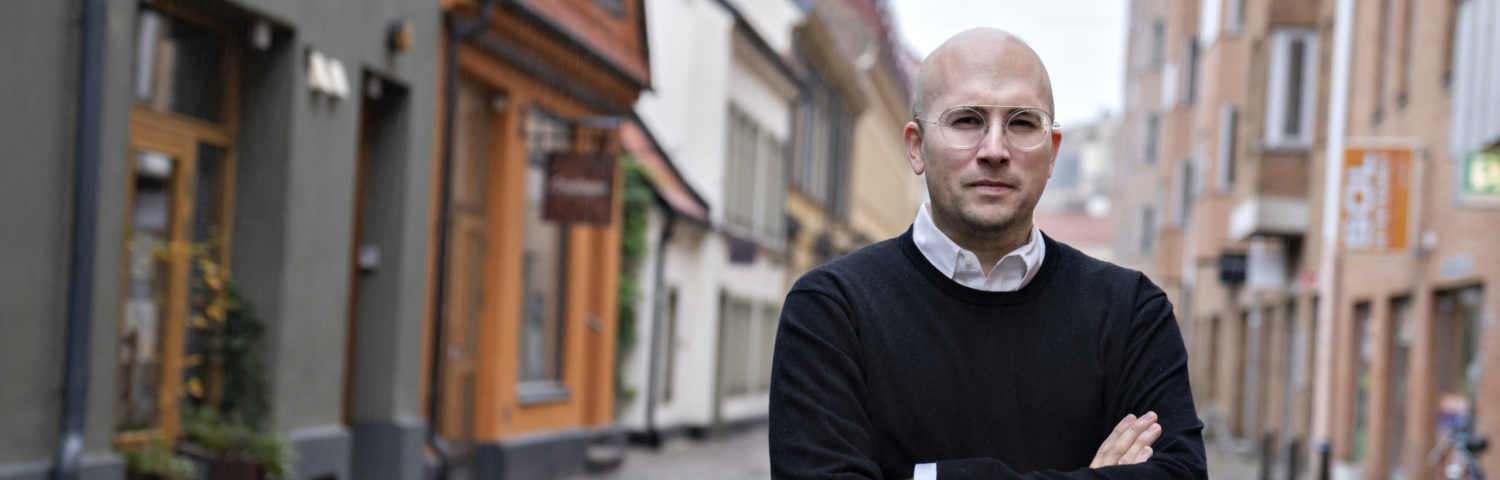
Sam Altman ousted from OpenAI: Who controls AI now?

SvD Näringsliv

This analysis was first published in SvD Näringsliv, in Swedish, on November 18th, 2023. This piece was translated from Swedish by Claude. Some phrasing may differ from a human translation.

AI development’s leading spokesperson, Sam Altman, has been fired as CEO of OpenAI. Just hours earlier, he was on stage in front of both the US and Chinese presidents. The aftershocks have only just begun.

If you get into a car in the northern part of Silicon Valley and drive south, you will be out of it roughly two hours later. That is all it is. This limited stretch of land is home to many of the world’s largest companies, and is the epicentre of the most important software development on the planet.

No technology has more eyes on it right now than AI. Since OpenAI released ChatGPT just over a year ago, a flood of new companies and initiatives in the field have emerged. Right now, around half of all investment capital in the entire world flowing into AI is going to Silicon Valley alone. Around 118 billion kronor streamed into the area in just the first quarter of this year.

It is against this backdrop that one should understand the bombshell that dropped late on Friday evening, Swedish time.

Sam Altman, CEO of OpenAI, was fired with immediate effect. The single most important person, at the most important company, in the most important area of technology development was forced out by his own board. In a statement, OpenAI’s board wrote that Altman had not been “consistently candid in his communications” with them. Interim CEO will now be Mira Murati, the company’s chief technology officer. Altman himself has not gone into detail about what happened, beyond saying that he will miss his job.

The event came as a complete surprise to everyone involved. Microsoft, which has invested more than 100 billion kronor in OpenAI, only found out about the news a few minutes before the press release was sent out. Altman himself had just been at the major Asia-Pacific Economic Cooperation summit alongside Xi Jinping and Joe Biden.

He went directly from there to a video call with the board, where he received the news. The board’s chair and one of OpenAI’s co-founders, Greg Brockman, was also asked to step down but was allowed to retain his position at the company. He chose to resign of his own accord a few hours later.

Corporate governance played a central role in what unfolded. To say that it is often inadequate at tech companies in Silicon Valley is an understatement. Companies are frequently controlled through dual-class shares by their founders, which renders boards toothless. Tesla has Elon Musk’s own brother on its board. The collapsed crypto exchange FTX had no board at all, despite having 120 different investors.

OpenAI’s board consisted of research chief Ilya Sutskever, the now-departed Greg Brockman, and three independent members: Adam D’Angelo, Tasha McCauley, and Helen Toner. According to news site The Information, there had been internal conflicts between Sutskever and Altman in the period leading up to the announcement.

The disputes had centred on whether OpenAI was developing its AI technology safely enough, given the risks it entails. At an internal meeting following the announcement, Sutskever was asked whether Altman’s dismissal could be seen as a coup. He disagreed with that characterisation, but added that the way it had happened had not been ideal.

How OpenAI functions and is run is a question that affects far more than just the company’s employees and customers. Many of the billions invested in the field involve products and services that rely on OpenAI’s technology in various ways. It is Microsoft’s single most important investment, and a cornerstone of their strategy.

OpenAI is also the first company in over a decade to genuinely shake Google — the search giant whose AI ambitions only really accelerated once it began to face external competition.

Much has been said about the future risks of AI development and the kinds of problems it might cause down the line. What has been talked about considerably less are the immediate problems that the concentration of power in the field is creating right here and now. A handful of well-known giant companies control all of the development that society is currently witnessing.

When individual board members, with unclear motives, make decisions of this kind, enormous shockwaves ripple through an entire industry. The transparency, scrutiny, and accountability applied to these power-holders is virtually nonexistent.

The question everyone is now asking — the same one OpenAI’s staff and very likely Sam Altman himself are sitting with — is this: who actually controls AI development?

Seven American tech stocks are deciding your pension

SvD Näringsliv

This analysis was first published in SvD Näringsliv, in Swedish, on November 16th, 2023. This piece was translated from Swedish by Claude. Some phrasing may differ from a human translation.

The influential S&P 500 is said to show how the American stock market is doing. But in practice, it is seven individual tech stocks that are holding the entire index — and millions of Swedish pension savers — under their wings.

The city of Omaha, Nebraska, is rarely as popular as it is every May. That is when the world flies in to attend the annual meeting of Berkshire Hathaway. A normally rather ordinary event has become a kind of show where Warren Buffett and Charlie Munger hold court and dispense aphorisms.

“For most people, the best thing they can do is own an index fund with S&P 500. A lot of people pay a lot of money for advice they don’t really need,” said Buffett at the 2020 meeting.

The S&P 500 is a stock index comprising 500 of the largest listed companies in the US (that also meet a range of other criteria). How it performs is considered an indicator of the health of the American equity market as a whole.

Or at least that has been true until now.

Pull out seven stocks from the 500 and a completely different picture emerges.

The Economist calls them “the magnificent seven.” They are familiar company names to anyone who reads these analyses. Tech giants Alphabet (Google), Amazon, Apple, Meta (Facebook), Microsoft, Nvidia, and Tesla account for 1.4 percent of the index by number — but represent a full 29 percent of its value.

So far this year, the S&P 500 has risen around 15 percent. Remove the seven tech giants and look at the remaining 493, and the picture is not as cheerful. The S&P 493 — as The Economist calls them — actually fell 2 percent in the first ten months of the year. The seven tech companies rose 52 percent.

Swedish tech companies have not enjoyed the same dazzling performance. The OMX Stockholm Technology PI index — a selection of tech companies on the Stockholm Stock Exchange — has fallen around 10 percent since the start of the year. And that is before counting individual casualties outside the index: streaming service Viaplay (down 87 percent), investment company Kinnevik (down 32 percent), and gaming company G5 Entertainment (down 31 percent).

There are no tech giants in Europe or Sweden remotely comparable to the American seven.

The enormous size of these seven companies also creates challenges around how various indices are weighted. It means that Swedes can end up with very large exposure to these seven giants — even if they have not explicitly bought any tech funds. They are so large that they appear in both US funds and global funds. Look at the popular Swedish fund Länsförsäkringar Global Index and its seven largest holdings are precisely the tech giants listed above. The same pattern holds at other major funds in the Swedish market.

“The magnificent seven” dominate among the most popular pension funds too. The default fund AP7 Såfa, owned by close to 5.3 million Swedes, follows the same pattern: of its ten largest holdings, all but one are in the tech sector. A total of 16 billion kronor of these pension savings sit in chip company Nvidia, currently trading at a rich valuation of 37 times revenue. The equivalent figure for Apple is around 8. And this is the fund you are automatically placed in when you have made no active choice about your premium pension.

Two things become clear when looking at this distribution.

First and foremost, it is evident that the very largest tech companies in the US have left the stock market and the rest of their category far behind. They are now in their own orbit — far removed from their industry peers. Talking about tech companies as a single category is no longer meaningful without distinguishing these seven from the rest of the list.

The second is that Swedish retail investors and pensioners have a greater exposure to tech companies than they probably realise. Savers who explicitly buy tech funds know what they are getting into. But that the tech giants dominate ordinary funds to this degree is not equally obvious.

Even those who have made no active choice about their pension at all now have a stake in billions of kronor worth of chips being sold for AI development. Because whether you believe in them or not, these tech stocks are almost certainly somewhere in your savings.

For all our sakes, let us hope they keep doing as well going forward.

OpenAI’s ChatGPT Store borrows Apple’s playbook

SvD Näringsliv

This analysis was first published in SvD Näringsliv, in Swedish, on November 7th, 2023. This piece was translated from Swedish by Claude. Some phrasing may differ from a human translation.

OpenAI has borrowed the strategy of Silicon Valley’s most successful company. Now they want to become the app store of the AI era.

It is called “Cerebral Valley” these days — something like Brain Valley or the Intellectual Valley.

The small hipster neighbourhood in San Francisco is actually called Hayes Valley. Wedged between a motorway and the slightly more upscale Fillmore district, Hayes Valley is ordinarily a place where you buy green juices, eat brunch, and browse home furnishings.

Over the past few months, it has also become a centre of AI development in the San Francisco area — and the world at large. Entire buildings in the neighbourhood have been transformed into collectives where AI development takes place at a furious pace.

That Sam Altman, CEO of OpenAI, chose to hold his first developer conference in San Francisco was therefore no coincidence.

Altman — a Silicon Valley veteran — knows how important it is to have developers on side. And he had clearly drawn inspiration from a particular, black-clad business leader from the region when he presented OpenAI’s news to the world on Monday evening Swedish time.

“Later this month, we will be launching the GPT Store,” Altman said from the stage.

A lone enthusiast in the audience spontaneously applauded, interrupting him, before being thanked for his encouragement by Altman with a laugh.

The GPT Store will be a kind of app store for AI products. Instead of an “app,” it is called a “GPT.” But the purpose is the same as Apple’s App Store or Google’s Play. It is a place where developers can distribute their AI products to the public, and where users can find ready-made applications of AI technology.

Altman was sparing with the details, but specifically mentioned the possibility of sharing revenue between OpenAI and the developers.

The announcement came roughly one year after the product ChatGPT took the world by storm and started the great AI wave we are now living through. OpenAI’s valuation is reported to be around 985 billion kronor today.

Just over 15 years earlier, Steve Jobs — then CEO of Apple — stood in a black turtleneck in San Francisco and presented the concept of the “App Store.” The store came after the iPhone had launched, and was introduced in a somewhat similar fashion to the way Altman did on Monday. The message was: now you as a developer can reach all iPhone users with your product. And we will share revenue with you when you sell your product to them.

It was, of course, no coincidence that the introduction looked so similar.

Analyst Ben Thompson coined the term “aggregation theory” to describe when a company brings together dispersed products, services, or users and packages them all in one place.

If you manage to aggregate enough of something, you become very difficult to compete with. Why go anywhere else when everything is already available in one place?

Through aggregation theory, you can understand the strategy behind Amazon (aggregate all products), Google (aggregate all search results), and Facebook (aggregate all relationships). Apple has also benefited from this — but perhaps most powerfully through the App Store itself.

By aggregating all apps, Apple built a destination for iPhone users and a vital sales channel for developers. Apple sits at the centre of this entire app economy. You cannot go around them even if you wanted to — they permit no other stores on their platform, a matter that has been before the courts on numerous occasions.

For Steve Jobs and Apple, the App Store became a masterstroke of strategy. Not only did it supply their hardware with a vast array of games and services; it became an entire economy in its own right. A study commissioned by Apple itself showed it had sold digital goods and services worth around 1.1 trillion kronor in 2022 alone. And in the middle sits Apple — earning on every transaction, both directly and indirectly.

Just as app development exploded in the late 2000s, it is now AI development that has taken the equivalent position. OpenAI launched it on a massive scale with ChatGPT. You could call it AI development’s iPhone moment — the starting point for a new era. What, then, could be more logical than following the same strategy when it comes to the store?

The GPT Store instantly becomes the hub for this AI development — a place where you will find new, exciting AI products, and where companies can sell what they have built.

But this time, it is not Apple in the driving seat. It is Sam Altman and OpenAI. He has seen how it tends to go when a new era arrives.

All you have to do is borrow the strategy from Apple — the most successful company in Silicon Valley — and make your own version.

Sam Bankman-Fried is convicted — but it’s not over yet

SvD Näringsliv

This analysis was first published in SvD Näringsliv, in Swedish, on November 3rd, 2023. This piece was translated from Swedish by Claude. Some phrasing may differ from a human translation.

The guilty verdict against Sam Bankman-Fried came after just a few hours. A historic fraud has been exposed — but it is not over yet.

An entire room of interns stood watching an odd man flipping a coin in the office, over and over again.

It was to settle a bet with a colleague. You might think flipping a coin would be a simple way to decide such a thing. Not in this case. There was a mathematical model underpinning the whole thing.

That is the perspective Sam Bankman-Fried — or SBF, as he is usually known — has on the world at large.

The scene comes from Michael Lewis’s book “Going Infinite.” At that point, Bankman-Fried was trading funds at Jane Street Capital in New York.

Most recently, he was CEO of the cryptocurrency exchange FTX — the company that imploded almost exactly a year ago.

On Thursday, the verdict came after an 18-day trial. The jury needed just a few hours to reach a conclusion.

Guilty on all seven counts — primarily various forms of fraud.

When Theranos CEO Elizabeth Holmes was convicted in another high-profile case, the jury took a full eight days to decide. The contrast says something about the weight of the evidence against Bankman-Fried.

Five additional counts remain and will be addressed in March 2024, which is also when Bankman-Fried will receive his sentence from the judge.

It will likely be long. Several of the counts individually carry up to 20 years in prison, and in total the sentence could reach 115 years — before the remaining counts are factored in.

The verdict was expected. Testimony from close colleagues at FTX and the connected hedge fund Alameda Research has been devastating. Most damaging of all was the testimony of his closest colleague and former girlfriend, Caroline Ellison.

Ellison was CEO of Alameda Research, and described how the fund had used FTX customers’ money as a kind of bank. The fact is that customer funds always sat at Alameda, because FTX — hard as it is to believe — had no proper bank account. This was due to restrictions from ordinary banks and their scepticism towards crypto trading.

When customers deposited money into FTX, it ended up in Alameda’s bank account instead. That was a problem in itself. But the bigger problem came when Alameda made a long series of bad trades, having borrowed from unknowing FTX customers. When the crypto market crashed, it was impossible for Alameda to repay the loans. When FTX customers subsequently tried to withdraw their money, it was no longer there. FTX filed for bankruptcy protection.

89 billion kronor had vanished.

According to Caroline Ellison, there were many signs of irregularities before everything collapsed. Bankman-Fried — founder and largest shareholder of both FTX and Alameda — knew that seven different balance sheets existed for Alameda, and asked her to send versions to partners that did not show the loans from FTX.

This was done to make the internal finances look better to worried lenders. Ellison admitted in court that these different balance sheets were “dishonest.” Examples like these were stacked up throughout the testimony, supported by audio recordings, documents, and saved chat logs.

After the verdict, prosecutor Damian Williams said that “Sam Bankman-Fried has perpetrated one of the largest financial frauds in American history.”

That prosecutors had strong evidence was apparent from the outset. It is very unusual for cases like these to go to trial unless the prosecution is confident of winning. Research institute Pew showed that fewer than one percent of all cases that reached court in 2022 ended with the accused being acquitted. Bankman-Fried now contributes to the prosecutors’ strong statistics.

But it is not quite over. There is a strong case that the verdict will be appealed. When I was at the courthouse in New York earlier this week, observers and press had a theory that an appeal — perhaps on legal technicalities — was the primary defence strategy for Bankman-Fried. As the trial developed, the defence may have shifted focus towards finding grounds for appeal rather than winning outright.

Bankman-Fried’s parents — Barbara and Joseph, both law professors at the prestigious Stanford University — participated actively throughout the trial, in continuous discussion with the defence team.

Several counts remain outstanding, and a successful appeal is far from certain.

What we do know is that Sam Bankman-Fried likes to think mathematically about himself and the world around him. The odds of him succeeding are bad — but they are not zero.

Microsoft’s unexpected comeback is making Google sweat

SvD Näringsliv

This analysis was first published in SvD Näringsliv, in Swedish, on October 25th, 2023. This piece was translated from Swedish by Claude. Some phrasing may differ from a human translation.

Billion-dollar AI investments and the world’s largest gaming acquisition. CEO Satya Nadella has repositioned Microsoft for the future — and aimed it directly at Google. The quarterly reports suggest even more investment lies ahead.

Satya Nadella was in a good mood when he was recently in Berlin to accept an award — and took the opportunity to talk cricket.

Microsoft’s Indian CEO sat relaxed in a dark suit, without a tie, and told anecdotes about what he had learned from his favourite sport.

“Learn from your competitors, but don’t be in awe of them.”

That philosophy is easy to recognise in what the new Microsoft looks like. Who would have thought, a year ago, that the tech giant from Seattle could credibly challenge Google in search? And position itself as a leader in the exploding AI wave?

But that is where Microsoft finds itself now. How fitting, then, that both tech giants chose to report their quarterly results on the same day.

The reports from both companies on Tuesday evening were strong. Both Google and Microsoft beat analyst expectations on all key metrics. Revenue rose 11 and 13 percent respectively, and profits grew solidly at both companies. For Google, it was the advertising business in search — the company’s heartbeat — that looked strongest, while Microsoft showed robust growth in its cloud services, with revenues up 19 percent. The core businesses of both are performing powerfully — even as they have been somewhat overshadowed in terms of public attention.

Expectations aside, the biggest Microsoft news came a few weeks earlier.

That was when the acquisition of gaming giant Activision Blizzard was completed, after months of negotiations with competition authorities in several countries. The final price tag was 755 billion kronor, moving Microsoft to become the world’s largest game developer by revenue.

The acquisition builds on Microsoft’s successes with the Xbox console. It has previously bought additional studios such as Bethesda and Swedish Mojang.

With mobile game developer King — the Swedish company behind the mega-hit Candy Crush Saga — included in the new acquisition, Microsoft also becomes by far Sweden’s largest owner of gaming studios, with a combined revenue of more than 10 billion kronor.

Like the television industry, gaming is moving towards a subscription model. Xbox Game Pass is Microsoft’s service that offers games this way, and acquiring studios is a means of ensuring a pipeline of new titles for it. This move is aimed primarily at rival Sony, which owns PlayStation, and much of the regulatory negotiation focused on ensuring access to certain titles across all platforms. That says something about the position that video games have reached in the world.

Google’s exposure to gaming is very limited. The company owns Google Play — the largest store for Android devices — and made a larger push into streaming games through a project called Stadia. Google approached the gaming world — true to form — with advanced technology designed to create a better experience through cloud services. But the reception was lukewarm, and the service was barely launched before it was shut down.

For both Google and Microsoft, their enormous scale is a challenge in itself. It creates a kind of Darwinism in which only the very largest initiatives receive sufficient attention to survive internally. An acquisition of 755 billion kronor is of course enormous — but it has to be seen in the context of Microsoft’s market capitalisation of close to 27 trillion kronor. If initiatives are not large enough, they make no difference to the companies as a whole. With this perspective, one can also understand the massive billion-dollar investments both companies are making in AI right now. Not investing on a sufficiently large scale becomes almost pointless.

The challenge for both tech giants is to balance enormous, long-term investments with the here-and-now of the business. While the market waits for efficiency gains and sales increases from AI, there is an ordinary core business delivering profits day to day. Lose focus on that, and you erode the ability to keep investing in the future. But with reports as strong as the ones both companies delivered on Tuesday evening, we can expect more major investments and acquisitions from both Microsoft and Google going forward.

Viaplay crashes after delayed quarterly report

SvD Näringsliv

This analysis was first published in SvD Näringsliv, in Swedish, on October 24th, 2023. This piece was translated from Swedish by Claude. Some phrasing may differ from a human translation.

Crisis-hit Viaplay is crashing on the stock market after failing to deliver its quarterly report on time. Fraught negotiations with the new owners have added more disorder to an already difficult situation. But there is one conceivable solution.

“The situation is complex and takes time because we have several stakeholders,” says Viaplay CEO Jørgen Madsen Lindemann.

The word “complex,” however, does not quite do justice to the situation. Streaming company Viaplay is under enormous pressure — from the outside world, from partners, and now from its own owners. And on the stock market, the share price is in freefall.

The company’s quarterly report was due to be released on Tuesday, but late on Monday evening the board decided to push it back by roughly a month. The stated reason is negotiations with some of the largest shareholders about how the business should be financed going forward. The fact that they have not reached a conclusion in time to meet the market says something about how difficult those negotiations are.

There are three primary problems to manage.

The first is a structural crisis in the streaming market. The growth of new customers is over — it is now about taking market share from competitors. That may sound unremarkable, not unlike many mature industries, but this is not a situation Viaplay has had to navigate before. The company does have conventional broadcast TV operations too, but it is streaming that the market is counting on for the future. If that stalls, Viaplay stalls too. With competitors like Netflix, Disney, and Warner Bros. Discovery, this challenge will not be easy. If Netflix — with its global reach and enormous resources — cannot solve it, Viaplay is unlikely to fare better.

The second problem is the existing commitments the company has made. What primarily drives subscription sales in the Nordics is sports rights. The service that offers Premier League or Champions League will attract a large influx of customers. Viewers are, however, more loyal to their favourite clubs than to the service broadcasting the matches. Long-term contracts with rights holders are therefore signed to retain those newly acquired customers over time. Viaplay has won several of these negotiations and secured very attractive sports rights.

Over the next three years, Viaplay must pay 38 billion kronor in costs for these rights. Last year the entire company turned over 15.6 billion kronor, and its market capitalisation at the time of writing is around 1.8 billion kronor. On top of that, there is a currency risk: the contracts are written in dollars and euros, and the Swedish krona has fallen since they were signed.

To be able to enter commitments of this size requires financing — and through that, bank guarantees. This is likely where things are getting uncomfortable for CEO Madsen Lindemann. If the banks become uncertain about whether Viaplay can honour these obligations under the terms of the agreements, it could trigger a restructuring. This is where strong, supportive owners are needed — which brings us to the third problem: the ownership structure.

Just over a month ago, Norwegian media owner Schibsted bought into Viaplay. They took what is known as a “corner” — just enough shares to make it impossible to sell the company without them at the table. Schibsted now owns 10.1 percent. French group Canal+ and the Czech fund PPF were already on the register. Getting this disparate group of owners — who may each have entirely different interests — to agree is, to say the least, a challenge. Not only is Viaplay under pressure and in a weak negotiating position; those sitting on the other side of the table may have completely different views on how to resolve it.

On the horizon, there is one conceivable — if very difficult to execute — solution for Viaplay. If Schibsted takes a more active role and finances the company, there is a consolidation to be done in the Nordics. Telia has been trying to sell TV4 for some time, but there are few buyers in this market. Merging Viaplay and TV4 would solve two problems at once: it would end the bidding war for sports rights, and allow for shared cost reductions. A new Nordic TV giant would be created, with Schibsted as the majority owner. Schibsted is rumoured to be on the verge of selling its stake in the marketplace company Adevinta, which would give it substantial capital to deploy.

There is still a long way to go before such a deal could take shape. Whether competition authorities in the various countries would approve it is also highly uncertain. But it may be worth attempting. Because Viaplay needs change.

Footnote: Svenska Dagbladet is owned by Schibsted.

The tech giants are feeding disinformation

SvD Näringsliv

This analysis was first published in SvD Näringsliv, in Swedish, on October 18th, 2023. This piece was translated from Swedish by Claude. Some phrasing may differ from a human translation.

Major news events drive people to social media. But the channels flood with disinformation — spread further by the tech giants’ own algorithms.

Working in media means constantly reading obituaries for your own industry. A few have come from this pen over the years too. The challenger in recent years has always been the same: social media.

The appeal is obvious. When major news events occur in the world, both eyewitness accounts and reporting from journalists on the ground are shared on social platforms. The speed and authenticity of active social media users is said to challenge the role of traditional news media.

And it has undeniably become a challenge — for both media companies and society. But not for the reason that was first assumed.

The report “Swedes and the Internet 2023” shows clear differences in how and where people of different generations consume news. Among those born after 2000, 56 percent say they get news from social media — 16 percentage points ahead of the next largest medium, television, at 40 percent. The corresponding figures for those born before the turn of the millennium look markedly different: there, television, radio, and websites are all individually larger than social media.

Beyond the choice of channel, one should also look at the type of news and information being conveyed there. In complex conflicts such as the ongoing one in Israel and Palestine, engagement on social media platforms like X and TikTok was enormous. A large part of the content turned out to be false — everything from video game footage to fireworks from other occasions was presented as part of the fighting. Drawing on the new Digital Services Act (DSA), the EU required X to share content data and the platform was subsequently forced to remove thousands of posts.

Tech companies owning services like Facebook, TikTok, and Instagram have long encouraged news consumption on their platforms.

This is how it sounded in 2017, for example, when Facebook hired journalist and then-CNN anchor Campbell Brown to lead their news team:

“Right now we’re seeing a massive transformation taking place in the news industry — both in how people consume news and how reporters distribute news. Facebook is an important part of this transformation.”

Facebook did indeed become an important part of how news spread in the months that followed — but perhaps not in the way Brown had intended. The following year, 2018, the Cambridge Analytica scandal exploded, and Facebook CEO Mark Zuckerberg was called to testify before Congress.

Two weeks ago, Campbell Brown left Facebook (now Meta, which also owns Instagram and WhatsApp). X has also let go of staff working on similar issues.

What will happen to Meta’s investment in news and fact-checking is therefore unclear. But the timing could hardly have been worse. The fighting between Israel and Hamas is ongoing, as is the war in Ukraine. And within a year, there is a US presidential election. All are major news events with impact far beyond their immediate surroundings.

In Sweden, a parallel form of information distribution via social media is also playing out. SvD’s Emil Arvidson recently reported on how parts of a criminal network livestreamed themselves on a Sunday evening. Around 17,000 user accounts watched as both weapons and gang members were put on display. A live broadcast is just one button press away — whether you are a local politician or a criminal gang.

That individuals are responsible for the content is central to the entire concept of social media. There is something both appealing and democratic about it. Being able to express oneself publicly is now easily accessible to everyone.

The problem, however, is not this form of digital freedom of expression — it is how the platforms amplify these voices to others. When actors consistently spread disinformation through influence campaigns, they do not only reach those immediately around them; they are amplified by the services’ algorithms. News, information, or outright propaganda that engages people gets increased distribution — regardless of whether it is true. When all content and all senders are treated the same way, a culture of discourse is built in which the loudest, most controversial, and sometimes most reprehensible content is often what spreads furthest.

This is worth bearing in mind as more and more people go directly to these channels to form a view of the world. The companies behind social media care about the number of people watching, rather than the quality of the sender. In this way, the medium shapes its own content.

Given what that content has looked like in recent weeks, it is clear that the tech giants need to take greater societal responsibility. Not everyone needs to get their news from the same place. But it should be possible to tell who the sender is — and, as far as possible, to trust that what is being said is true.

Apple puts health at the centre — and privacy is the moat

SvD Näringsliv

This analysis was first published in SvD Näringsliv, in Swedish, on October 18th, 2023. This piece was translated from Swedish by Claude. Some phrasing may differ from a human translation.

Slowly but surely, Apple is moving ever closer to the most intimate thing we have — our bodies and our wellbeing. And in doing so, it is drawing yet another line against competitors such as Alphabet (Google), Meta (Facebook), and ByteDance (TikTok).

At Apple’s developer conference WWDC in June this year, the company outlined new features pointing to an ever-greater focus on an area that fits perfectly with its emphasis on privacy: health.

Walking alongside the Apple Park Pond — a pond located inside the company’s new, saucer-shaped headquarters — health chief Sumbul Ahmad Desai described the new initiatives. “We are moving into two new areas that are always grounded in science with privacy at the core,” she explained, referring to mental health and eye health.

Apple’s new software is designed to help users understand what contributes to their mental wellbeing, and to reduce the risk of myopia — the nearsightedness that affects 30 percent of the population — which can be influenced by spending a lot of time looking at screens. Those with an iPhone can also set it to different focus modes, so the phone does not disturb its owner when working, sleeping, or wanting a break from notifications.

The choice is no coincidence. Apple has selected two areas for which tech companies have previously drawn heavy criticism. The initiative thus becomes a kind of alibi for the responsibility the industry has been accused of shirking.

Mental health data is a particularly sensitive subject — something many people would prefer to share only with loved ones or professional care providers.

Here, Apple — whose multi-year commitment to protecting data and privacy is well established — can stake out a position that is hard for competitors to match. Nobody wants information about their mental state to feed targeted advertising.

Apple’s commitment is not entirely altruistic, however. Having a service where users track their wellbeing is also a way of ensuring they do not switch to a different mobile platform. And one way to prevent myopia is to get plenty of daylight — something Apple measures with its watch. In the presentation, Apple Watch is suggested as ideal for children, to ensure they spend enough time outdoors each day. So now even tech companies want children to go outside and play — provided they have a device on their wrist, of course.

Apple Watch has become the hub for a series of health initiatives in recent years. It can now perform basic ECG tests, measure nighttime body temperature, and track blood oxygen levels.

This makes the watch a kind of medical device that requires regulatory approval before it can be sold — a slow and administratively complex process, for understandable reasons, and not something a tech company would take on if it were not important.

That Apple has chosen to do so anyway says something about its ambitions in this space. Privacy, health, and hardware are converging into a strategy that its competitors — who built their business models on advertising — are structurally ill-placed to follow.

The search engine that refused to die: Yahoo is back

SvD Näringsliv

This analysis was first published in SvD Näringsliv, in Swedish, on October 11th, 2023. This piece was translated from Swedish by Claude. Some phrasing may differ from a human translation.

They were the centre of the entire internet during the 1990s, but lost that position to the tech giants. Now there is talk of a possible new stock listing. Has the legendary internet company Yahoo come back to life?

Jim Lanzone looked pleased and flattered at a so-called fireside chat — a relaxed on-stage interview format — about how he thought when he took on the legendary internet company Yahoo. Once one of the world’s most popular search engines, it had become the archetype of what used to be called a “homepage” on the internet. But that was many years ago.

“The problem with being a good turnaround guy is that people keep calling with more turnarounds,” said the interviewer.

The comment was a nod to the fact that people who can come in and turn around struggling companies are rare — and tend to keep ending up in similar situations.

Lanzone laughed, but quickly changed the subject. He had been involved in turning around companies before — including another search engine, Ask.com. But he did not seem to think Yahoo was a typical turnaround case at all. It was mostly just misunderstood.

The former internet giant Yahoo appears to be heading back into the spotlight. After serving as many people’s first internet experience from the late 1990s onwards, it was absorbed into telecom giant Verizon’s vague content play — alongside another classic internet company, AOL — between 2015 and 2017.

Despite its low profile, Yahoo managed to retain a loyal user base across many of the services it offered. The problem was more about explaining to the outside world what Yahoo actually was. The company was involved in so many different things — from photo storage to stock quotes — that something of an identity crisis emerged.

Things got darker when owner Verizon — as is so often the case with telecom companies — suddenly changed strategy. Swede Hans Vestberg was called in and announced they would focus on the core business: mobile networks and 5G. The value of Yahoo and AOL was written down by $4.6 billion, just 2.5 years after the deal was done. Yahoo was stuck in no-man’s land — unwanted by its owner and without focus.

The turning point came in 2021, when private equity giant Apollo Global Management (yes, the same one that has been involved with the airline SAS) bought out Yahoo and AOL for $5 billion. Jim Lanzone was then brought in as CEO.

Since then, Yahoo has undergone an impressive transformation and streamlining. It has sold off businesses in video, search technology, and the rights to its Japanese operations — something SoftBank bought for $1.6 billion. Instead, several acquisitions have been made in both financial and content services, to strengthen the areas that are working well. Among them is Yahoo Finance with 100 million users, Yahoo Mail with 225 million users, and Yahoo News with 900 million monthly readers.

For those who know their internet history, it is impossible not to remember when Yahoo was in exactly that company — among the most visited sites in the world, with services you could hardly avoid if you wanted to use the internet.

Being that important attracted attention even then. In early 2008, Microsoft tried to buy Yahoo for $41.6 billion — more than 450 billion kronor at today’s exchange rate. The bid went as high as $47 billion. But then-CEO and co-founder Jerry Yang turned it down with what is now an infamous quote: “we believe Microsoft’s bid substantially undervalues Yahoo.”

Yang badly misjudged the situation, and less than ten years later the company had been sold for roughly one tenth of what Microsoft had once offered.

A comeback may now be visible on the horizon. Lanzone’s Yahoo has cleaned up the company and found a new core to build on. The search engine that was once the source of its greatness has been set aside in favour of editorial investments in finance, news, and sports. Yahoo Finance now also offers trading and mortgage services, expanding it into a broader financial platform. Talk of a potential IPO is linked to Apollo’s likely desire for an exit — SoftBank is already an investor.

This is an internet comeback story. There are not many companies capable of sustaining such a long gap between their period of greatness and a potential second act.

The glory days will be hard to match again, but Yahoo does seem to be making a comeback — now more as a modern media company than a search engine. CEO Jim Lanzone has reason to be satisfied. He now has the opportunity to reintroduce Yahoo to an entirely new generation of internet users.

Bankman-Fried is not the scapegoat the industry is hoping for

SvD Näringsliv

This analysis was first published in SvD Näringsliv, in Swedish, on October 4th, 2023. This piece was translated from Swedish by Claude. Some phrasing may differ from a human translation.

He has been called “the new JP Morgan,” but now his colleagues have abandoned him. When the main trial against Sam Bankman-Fried opened on Wednesday, many were hoping for a conviction.

Sam Bankman-Fried was freshly trimmed when he appeared in the New York courtroom on Tuesday. A fellow detainee had helped with his hair. The day was spent selecting jury members. Several of them disclosed that they had lost money on cryptocurrencies.

For Bankman-Fried, a life sentence is sitting in one pan of the scales.

That the cryptocurrency market is under pressure is, of course, nothing new.

But there is no great show of solidarity from the industry behind its former colleague. On the contrary, many are hoping that Bankman-Fried gets convicted. For them, he becomes a scapegoat — someone to distance themselves from.

The reasoning is that the crash of FTX was down to a single individual who made mistakes, not the industry as a whole. Remove him from the picture, and everything is fine.

Since FTX collapsed just under a year ago, regulators have started cleaning up among bad actors and become clearer about what is and is not permitted. It sounds like an industry that has been through a purifying ordeal and is now on the road to recovery — doesn’t it?

But it is not quite that simple.

Even if Bankman-Fried’s fall is the most spectacular in the crypto market, he is far from alone in ending up there. Projects such as Terra, Celsius Network, and the entire NFT market have all crashed dramatically. As in the dotcom collapse, sites post news almost daily about various crises, security breaches, and outright fraud occurring in the crypto world. The list of projects that have collapsed — often with retail investors losing their money — is very long.

The FTX crash is different in that it also bears many similarities to the conventional financial system. The company had near-nonexistent risk management, large amounts of illiquid assets — and subsequently suffered a bank run. When customers went to withdraw their money, it was no longer there.

The situation was further complicated by the fact that they were trading cryptocurrencies — where regulation and oversight were entirely absent, and transparency around how FTX managed its affairs was very limited.

The trial concerns precisely this, along with associated fraud and money laundering. Customers’ assets were, according to the prosecution, used improperly. There is talk of houses in the Bahamas, sports arena naming rights, and expensive celebrity-fronted advertising campaigns. Money appears to have flowed almost freely between the trading platform FTX, Bankman-Fried’s hedge fund Alameda Research, and his personal finances. There are 1,300 pieces of evidence that prosecutors intend to present at trial.

Does a guilty verdict for Bankman-Fried mean the end of the crypto era?

Probably not. But not because he is so different from the rest of the industry — however much they might want people to think so.

What argues against it is simply the price of bitcoin. The underlying interest in bitcoin — the hub of the entire market — has risen 66 percent since the start of the year. How the price develops over the roughly six weeks the trial is expected to last, nobody knows, but bitcoin as an asset appears not to have been materially affected by the FTX drama so far. The core of the cryptocurrency world is volatile — as it always has been — but largely untouched by this particular episode. Confidence in this part of the market remains.

Sam Bankman-Fried made his name by applying traditional financial methods to what was then a fairly virgin crypto market. On several occasions, he described how he exploited price differences for bitcoin between Japan and the US. By buying and selling bitcoin across the two markets, he could pocket the spread — a practice known as arbitrage.

It was also there that he realised it would be more profitable to own the entire exchange, rather than to make individual trades. The idea behind FTX was born.

But there are reasons why not every player at the roulette wheel starts their own casino. It is more complex than it first appears.

For both Bankman-Fried and the more than one million customers at FTX, things would have been better had he stayed an ordinary trader — anonymous and understated, making good money in quiet. Instead, he bought Super Bowl advertising and luxury villas in the Bahamas. Just as with individual roulette bets, it does not always end well — even when you own the casino.

Sam Bankman-Fried maintains that he is not guilty. Now it is up to the court in New York to decide the matter.